
Underwriting a fix-and-flip deal before you borrow
It is easy to make a flip look profitable by leaving costs out. A purchase at $250,000 and a hoped-for sale at $430,000 may look like a $180,000 spread. That is not the deal’s profit. The renovation, financing, holding period, selling costs, and surprises all sit inside that gap.
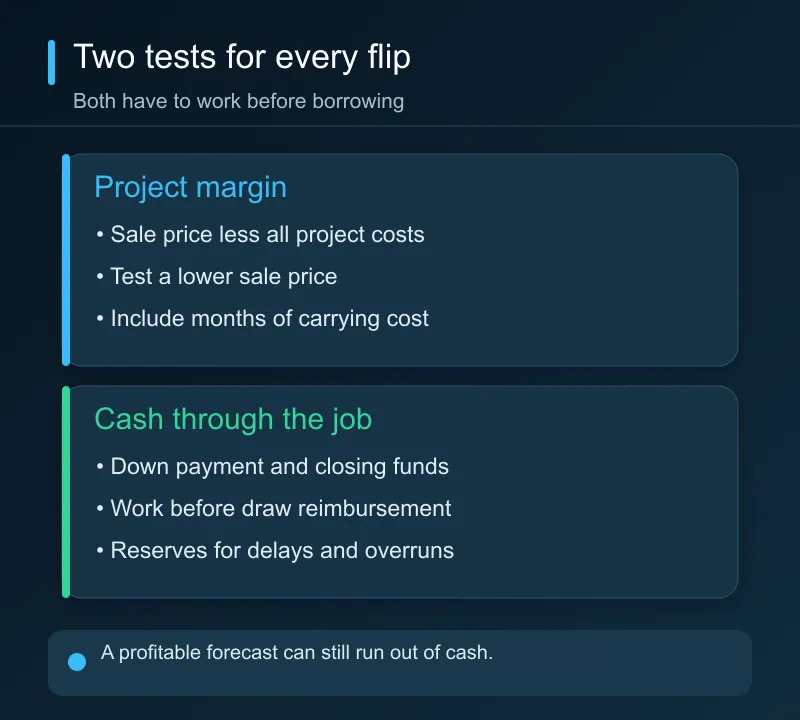
Profit at sale and cash needed during construction are separate tests.
Price the job you intend to build
Use a line-item scope from someone who has walked the property. Separate required repairs from finish choices and include permit, design, utility, dumpster, and inspection costs where relevant. For older or damaged houses, identify work that cannot be priced confidently until walls are opened. Put a contingency in the budget; do not rely on lender funds for costs the lender has not approved.
Support the finished sale price with closed comparable sales, not just current asking prices. Compare size, lot, age, location, and finish level. If your design requires a sale above recent local evidence, say so explicitly. A lender’s ARV estimate may support its loan cap, but it does not guarantee the market will buy the finished house at that price.
Count every dollar and every month
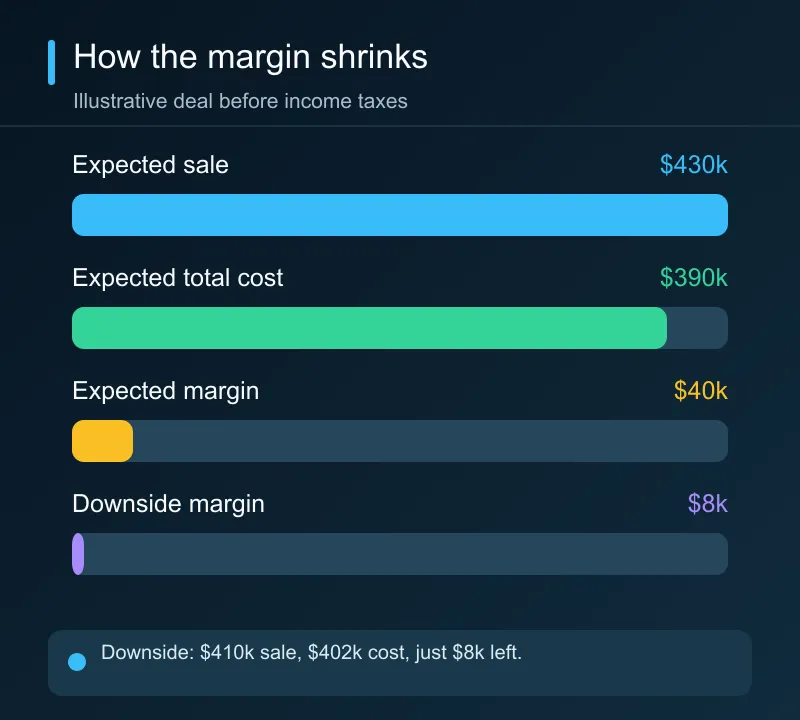
A lower sale and longer hold can consume most of an apparent flip margin.
Add purchase and acquisition costs, renovation and contingency, lender and title fees, interest, taxes, insurance, utilities, maintenance, and selling costs. Keep a calendar beside the budget. Permit delays, contractor scheduling, listing time, buyer financing, and final settlement all extend the period in which money is tied up. Ask the lender when interest starts on undrawn rehab funds and how payoff is calculated.
Here is a fictional project: purchase plus acquisition costs, $252,000; rehab plus contingency, $78,000; financing and holding, $34,000; selling costs, $26,000. Total cost is $390,000. At a $430,000 sale, the margin is $40,000 before income taxes and anything missed. If the sale price falls to $410,000 and a delay adds $12,000 in carrying and financing cost, the margin falls to $8,000. A single major repair could consume the rest.
Check cash, not only margin
Even a profitable project can stall if the builder cannot pay trades before a construction draw. Write down cash due at closing, cash required before the first reimbursement, and reserves for an extra few months. Compare those needs with verified available funds. The rehab-draw guide explains why an approved holdback is not a checking-account balance.
Calculate the break-even sale price and test at least one lower sale price and longer hold. If the project depends on the highest comparable sale, instant draws, and a flawless schedule, the offer price or scope needs another look. The FDIC’s commercial real estate guidance, for bank lenders, identifies limited borrower liquidity and repayment dependent on appreciation as warning signs. Those same weaknesses can sink a small flip.
The goal of underwriting is not to prove the deal works. It is to find the point at which it stops working while you still have a choice about buying it.