
Rehab draws: when renovation funds become available
A lender can approve the full renovation budget and still leave a builder short of cash on Monday morning. Many rehab loans reserve construction money and release it after work reaches agreed milestones. If a contractor wants payment before the lender reimburses that work, the borrower must cover the interval.
Some programs advance funds ahead of work; others reimburse work already completed. Anchor describes milestone-based releases, while Kiavi explains how draws affect interest on certain loans it services. Neither example tells you what your agreement requires. Obtain the draw instructions before you set a construction schedule.
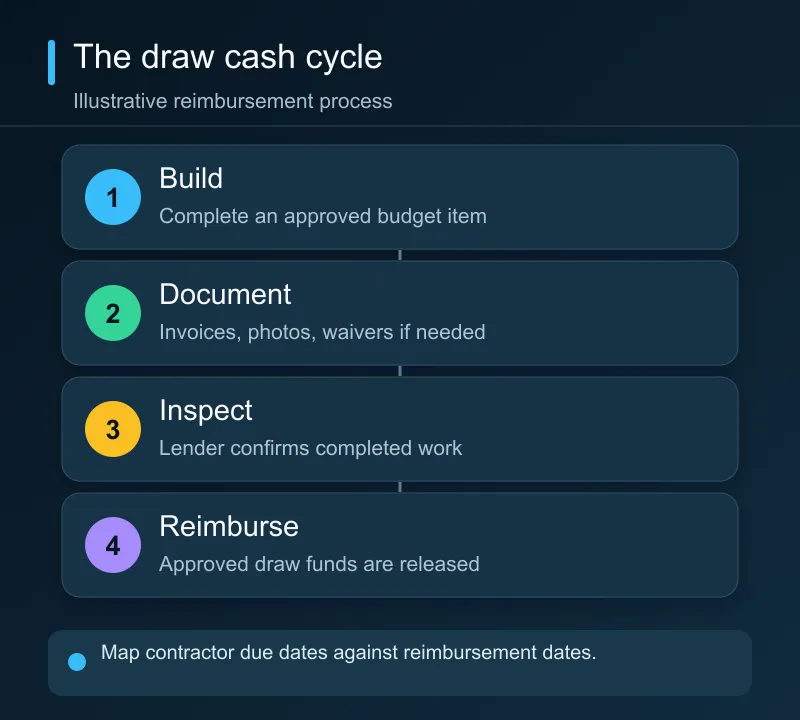
The contractor may need to be paid before the lender’s reimbursement arrives.
Follow one request from start to finish
A typical reimbursement cycle might be: complete an approved line item, pay or document the contractor invoice, assemble photos and any required lien waiver, submit a draw request, wait for inspection, resolve questions, and receive funds. The lender may approve only the percentage of work it considers complete. A $20,000 submitted request is not necessarily a $20,000 payment.
Ask for a sample request and answers to five operational questions:
- What evidence is required—photos, invoices, proof of payment, permits, waivers, or an inspection?
- What is the minimum request and the fee, if any, per draw?
- When does the turnaround clock start: submission, a complete submission, or inspection approval?
- Can the lender pay contractors directly, or must funds go to the borrower?
- What happens if work moves between budget line items or a change order exceeds the approved scope?
These details affect the contractor’s willingness to keep working. Put draw dates beside invoice due dates, not on a separate lender calendar.
Size the working-capital gap
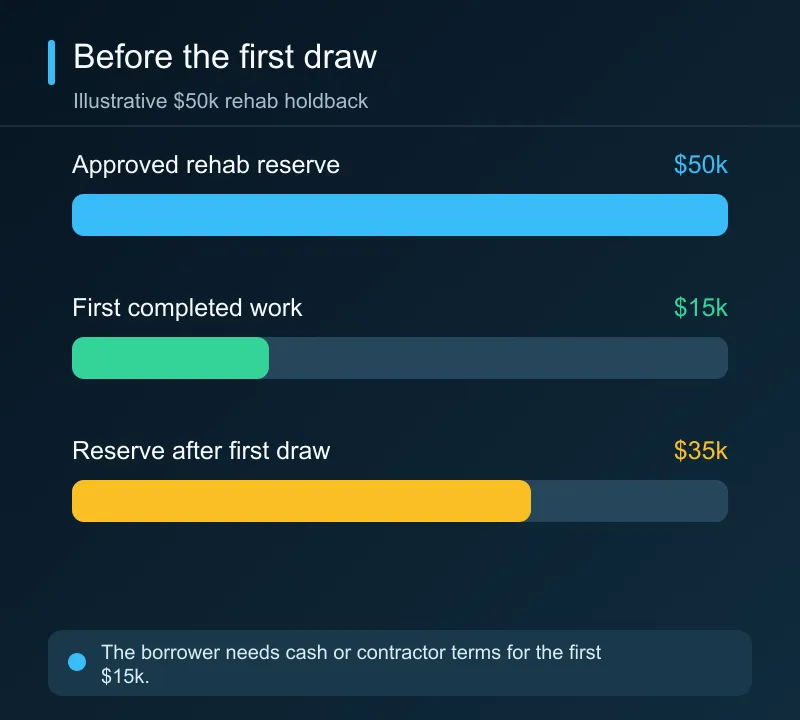
A funded rehab budget is not the same as cash available to start the job.
Suppose a loan includes a $50,000 rehab holdback. The first milestone requires $15,000 of completed work, and the lender reimburses only after inspection. The borrower needs enough cash or agreed contractor credit to get through that first $15,000, plus the time until funds arrive. A later draw may be used to replenish cash for the next stage, but a delay or partial approval can break that rhythm.
Reserve money for items outside the approved budget and for repairs discovered after opening walls. The OCC’s commercial real estate handbook describes construction advances tied to verified progress and lien checks in bank lending. Private lenders set their own rules, but the reason for documentation is practical: money should correspond to improvements that protect the collateral.
Keep the work easy to verify
Use the lender-approved scope as the backbone of your project ledger. Photograph work before it is covered. Match contractor invoices to budget lines and keep change orders in writing. Ask how quickly the lender will decide whether a proposed change can be funded. If the construction balance remaining is less than the cost to finish, address that gap immediately rather than waiting for the next draw.
The draw schedule is part of the loan’s real cost. A cheap rate cannot compensate for a funding process the project cannot survive. Review it with the contractor before closing.