
Ways to invest in hard money loans
Someone offers you a “real-estate-backed” investment paying a stated yield. Before judging the yield, find out what you would own. Supplying money to a property borrower is different from buying a slice of a loan, a note issued by a lending company, or an interest in a pool of loans. The property may be the economic source of repayment in all four, while your legal claim sits in a different place each time.
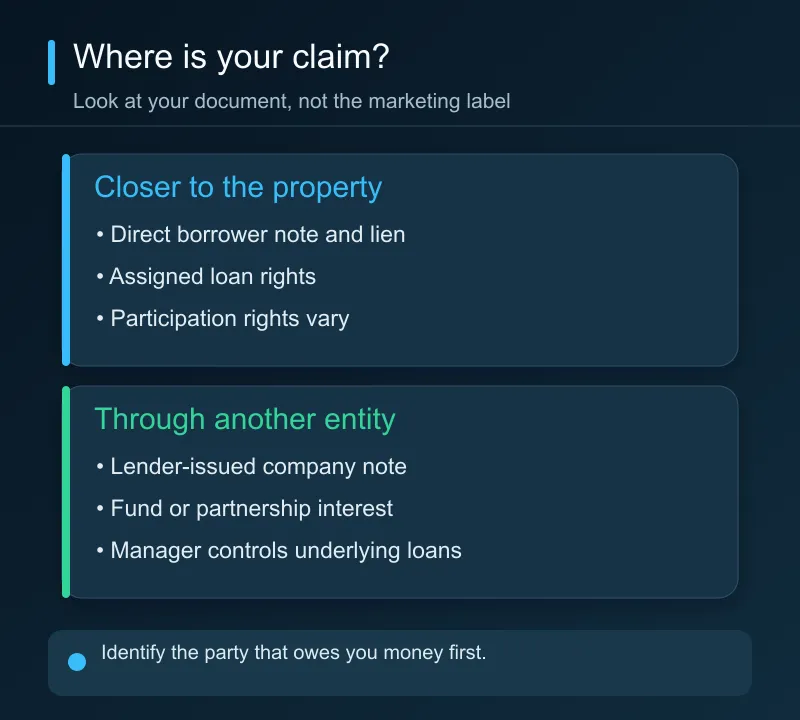
The same property loans can sit beneath very different investor rights.
Four routes, four sets of rights
Make a loan directly. You may be named as lender on a borrower’s note and mortgage or deed of trust. You choose the property and borrower, and you need a way to underwrite, document, service, and enforce the loan. One bad project can dominate the result if most of your capital is in that loan.
Buy a loan or participation. Another lender originates the loan and sells an interest. The agreement determines whether you hold an assigned interest in the note, a participation claim against the lead lender, or something else. Ask who holds the recorded lien, who receives borrower payments, and who may change terms or decide a workout. The FDIC’s guidance for banks buying loans and participations emphasizes independent credit review and clear contractual rights; private investors can use that as a diligence checklist, though it is not their governing rule.
Buy a note issued by a lending company. Here the company may owe you interest and principal while it makes or buys property loans with its own capital. Your note may be secured by specified assets, generally backed by company assets, or unsecured. Owning that note does not necessarily give you a direct lien on any borrower’s property. Read the security agreement and identify the actual obligor.
Invest in a fund or partnership. You usually own an interest in the entity, not in each property loan. A manager selects loans, services them, and distributes cash under the fund documents. The pool may diversify property exposure but brings fees, manager risk, and restrictions on withdrawal. A partnership interest in the operating lender differs again from an interest in a loan-holding fund. Our direct-lending versus LP comparison goes through that choice in detail.
Draw the money path
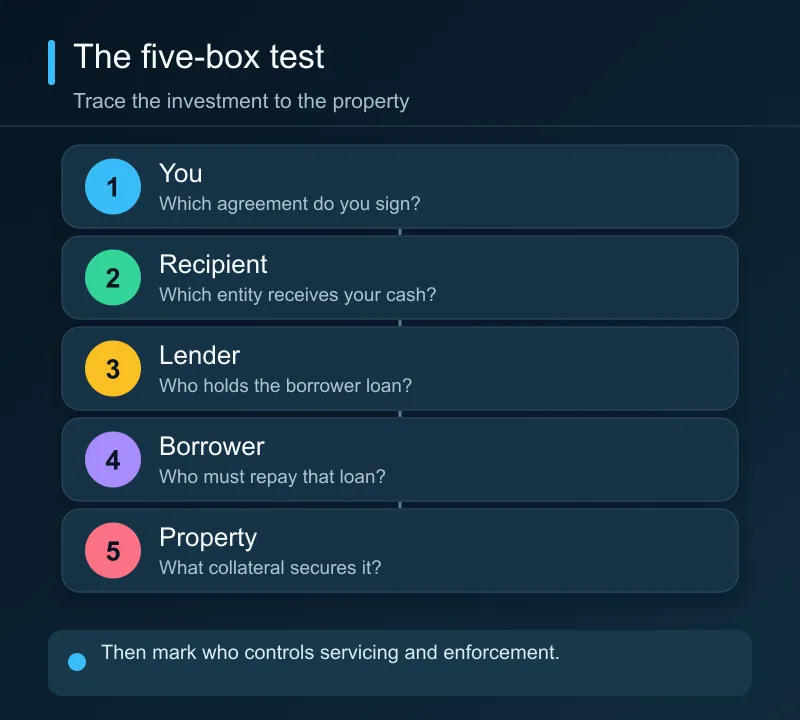
Fill each box with a legal name from the documents before investing.
For any offer, make a one-page diagram with five boxes: you, the entity receiving your money, the entity lending to the property borrower, the borrower, and the property. Add who holds the lien and who sends you payments. If the seller of the investment cannot make that diagram match the contracts, pause.
Then identify who bears a borrower default, a servicer failure, an operator bankruptcy, and a property-value decline. One arrangement may give you direct action against collateral; another may give you only a claim against an issuer. “First lien” on an underlying loan does not answer which rights you hold.
Interests sold to investors may be securities, depending on their structure. The SEC’s private-placement bulletin warns about limited disclosure, illiquidity, and possible total loss. Obtain the offering and transaction documents and have qualified counsel explain the claim you would receive. Only then compare fees, expected cash flows, and the work you must do yourself.