
How fix-and-flip financing works
A fix-and-flip loan does not finance a profit. It finances a sequence of tasks: acquire a property, make it saleable, find a buyer, and repay the debt from closing proceeds. Every handoff takes time and cash. A lender can approve the entire project budget while releasing only part of it at purchase.
Anchor’s renovation-loan description is one example of acquisition financing paired with milestone-based renovation draws. Other lenders release funds differently. Read the draw agreement before building the contractor’s payment schedule around the loan.
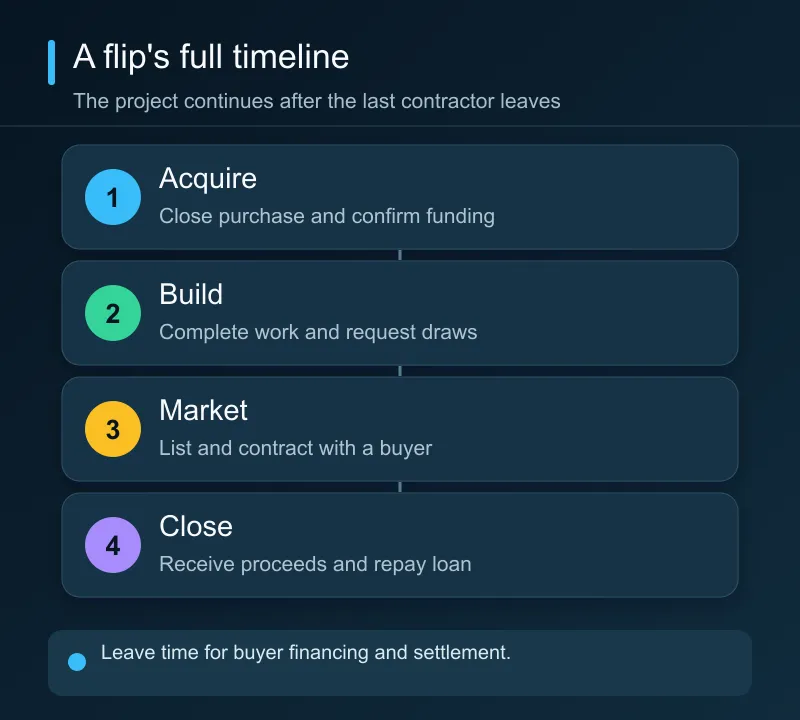
Finishing the work is only one milestone; the loan remains open until an exit closes.
Before the purchase
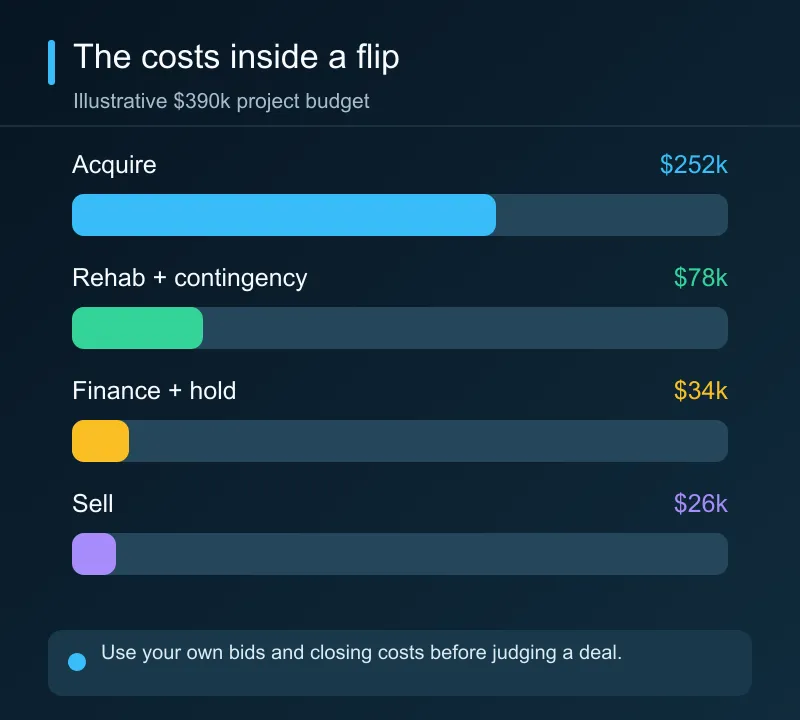
A flip’s margin has to absorb much more than the purchase price and contractor bid.
Start with a scope detailed enough that a contractor can price it: rooms, systems, materials, permits, and work that must happen before a buyer or inspector will accept the property. Walk through hidden-risk items—foundation, drainage, electrical service, roof, and unpermitted work—with the right trades. Do not let an estimated after-repair value substitute for a sale plan. Check completed comparable properties with similar size and finish, then allow for brokerage, concessions, and carrying costs.
The purchase contract should leave enough time for valuation, title, insurance, borrower documents, and any lender approval conditions. Ask whether the lender’s initial quote can change after it sees the property. A missed closing may cost a deposit or the deal itself, so the funding calendar matters as much as the loan’s advertised speed.
At closing
Request a sources-and-uses statement. It should show purchase price, closing costs, lender fees, amount wired toward purchase, construction holdback, and cash the borrower must supply. If the lender finances $60,000 of renovation but holds it for reimbursement, the builder may still need cash to start work. Confirm when interest begins on the held amount and whether a draw inspection carries a fee.
Some loans call for interest-only payments during the term; the principal still comes due at sale or maturity. Price insurance, property taxes, utilities, security, and lawn or snow care while the house is empty. A $300 monthly cost that never appeared in the contractor bid can become material over a long hold.
During the work
Keep the approved budget next to actual invoices and work completed. Photograph milestones before covering them. Collect permits, receipts, and lien waivers if the lender or closing agent requires them. The OCC’s commercial real estate handbook describes why construction advances are often tied to verified progress and lien checks. It is bank guidance, not a rule for every private lender, but it explains the mechanics behind many draw policies.
A change order can create two problems: a higher cost and work that the lender did not approve. Tell the lender early about a major scope change, especially one that affects permits or finished value. Our draw guide explains the cash cycle in more detail.
At sale
Marketing and settlement are part of the loan timeline. A finished house can sit on the market; a signed contract can fall through; a buyer’s lender can delay closing. Request an updated payoff statement before setting a minimum sale price. Deduct commissions, seller-paid costs, taxes or liens, and the full lender payoff from the expected price. Then compare what remains with every dollar of cash you put in.
Run that calculation at a lower sale price and a later closing date. If the margin disappears after a modest delay, reduce the purchase price, change the scope, add reserves, or pass. A flip loan works when the whole sequence works, not just when the lender says the deal qualifies.