
When a private real estate loan defaults
The day a property borrower misses a payment, an investor’s main question is often “When do I get my money back?” There may be no immediate answer. The lender or servicer first needs to verify the loan balance, property status, borrower capacity, and legal position. An extension, sale, modification, or enforcement action can each change the amount and timing of recovery.
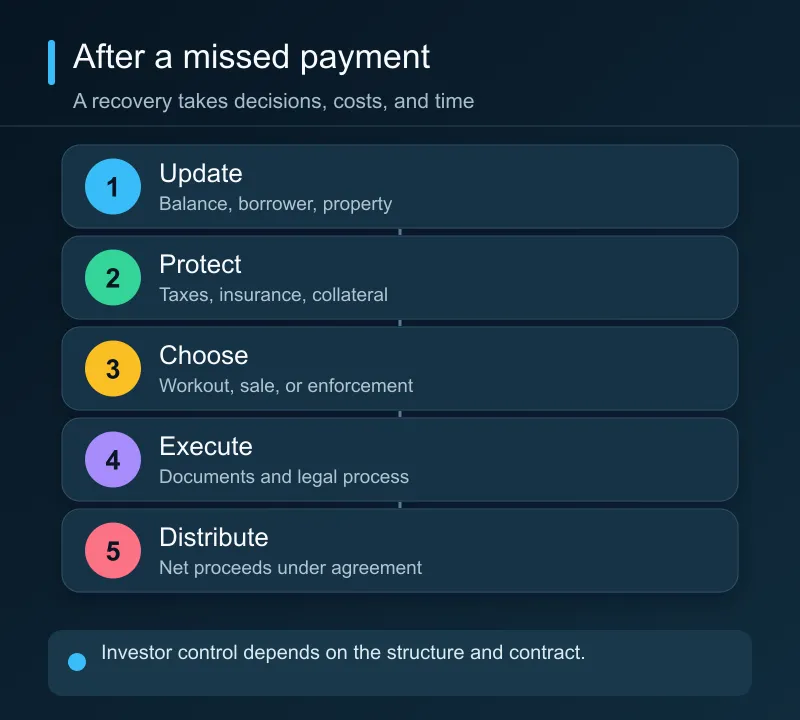
The first late payment begins a fact-finding and decision process.
Get a current file
Request the payment history, principal and accrued interest, maturity date, taxes and insurance status, construction progress, current photos, title or lien update, and a defensible as-is value. For an unfinished project, get a new cost-to-complete estimate. The original projected after-repair value is less useful if the borrower has stopped building. Ask whether there are unpaid contractors, property damage, or a lapse in insurance that could affect the collateral.
Then find out who may act. A direct lender may have decision rights under the note and security instrument. A participation buyer, noteholder, or fund LP may depend on a lead lender or manager. The agreement should say who can grant an extension, modify terms, begin enforcement, pay legal bills, and distribute recoveries. The FDIC’s participation guidance emphasizes defining default remedies and participant rights in advance for bank purchasers; the same questions matter to private investors.
Compare paths on net recovery
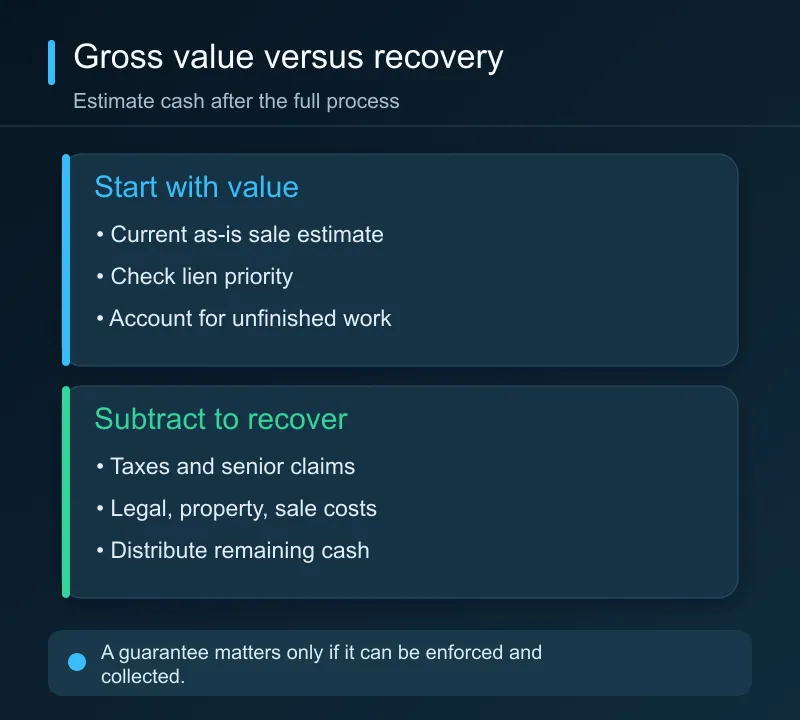
Recovery is what remains after claims and costs, not the property’s headline value.
A borrower with a credible buyer or refinance in process may justify a documented short extension. A borrower who cannot finish and has no repayment source presents a different case. Possible resolutions include a modification with new equity, a discounted payoff, sale of the loan, foreclosure or other enforcement, and eventual sale of the property. None is automatically quickest or best. The FDIC’s workout policy recognizes that a prudent workout can sometimes improve outcomes for banks and borrowers; it does not require a private lender to offer one.
For every path, estimate cash recovered after senior claims, taxes, legal costs, insurance, repairs, carrying costs, and selling expenses, and estimate when it might arrive. A $300,000 debt and a property that could sell for $300,000 do not imply full recovery. A personal guarantee has value only to the extent it is enforceable and the guarantor has collectible assets.
Communicate what is known and unknown
Investors should receive dated updates that separate facts from estimates: amount past due, actions taken, next decision date, money spent on preservation, and the current range of possible recoveries. A servicer that reports “performing” solely because a loan was extended may hide the change in risk. Ask how interest is being accrued and whether it is actually being collected.
Foreclosure procedure, lien priority, and remedies vary by state and contract. In a serious default, jurisdiction-specific legal advice is part of the recovery budget. The best time to understand who controls that process was before investing; the next best time is now, with the full file open.