
Vetting a private lending operator or servicer
An investor can understand the property and still lose money through poor loan administration. Someone must confirm title and insurance, decide how much to advance, inspect work, collect payments, respond to late loans, and manage legal action if necessary. If you invest through a lender, fund, or platform, find out who performs those jobs and whether the company can keep doing them when the market turns.
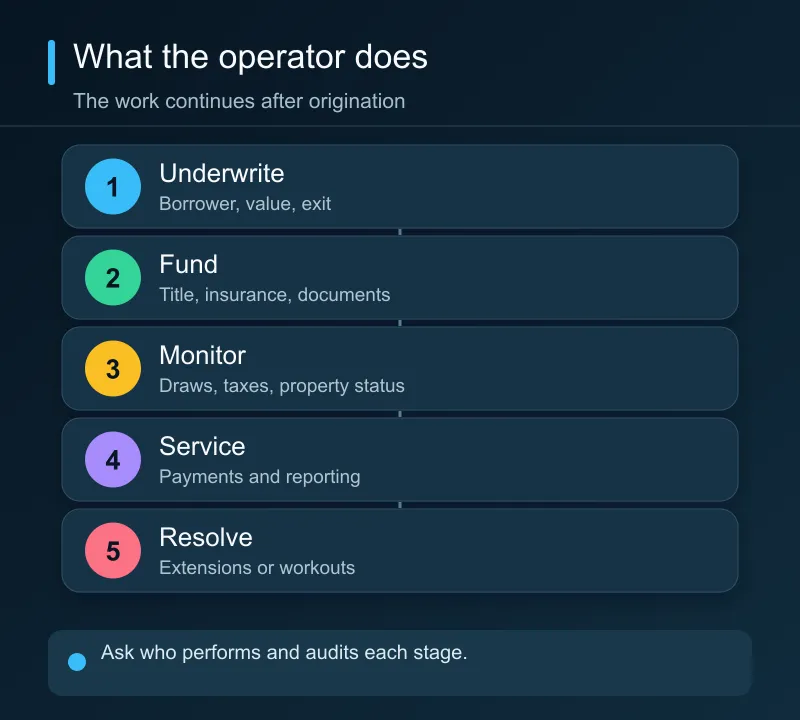
Operator quality matters long after the loan closes.
Ask for a loan from beginning to end
Request a sample file with identifying details removed. It should show an original credit memo, valuation support, title review, closing documents, construction budget and draw approvals where applicable, payment history, and a final payoff or workout record. Ask what is done in-house and what is outsourced. A glossy origination deck says little about servicing once a loan is funded.
Look for written policies, but also evidence they were followed. Who can override a leverage limit? Who approves a change order? What happens when taxes or insurance lapse? How often are collateral values reconsidered? Can the servicer be replaced if performance is poor? If investors have no access to loan-level files, ask what reporting they will receive and who verifies it.
Make performance data comparable
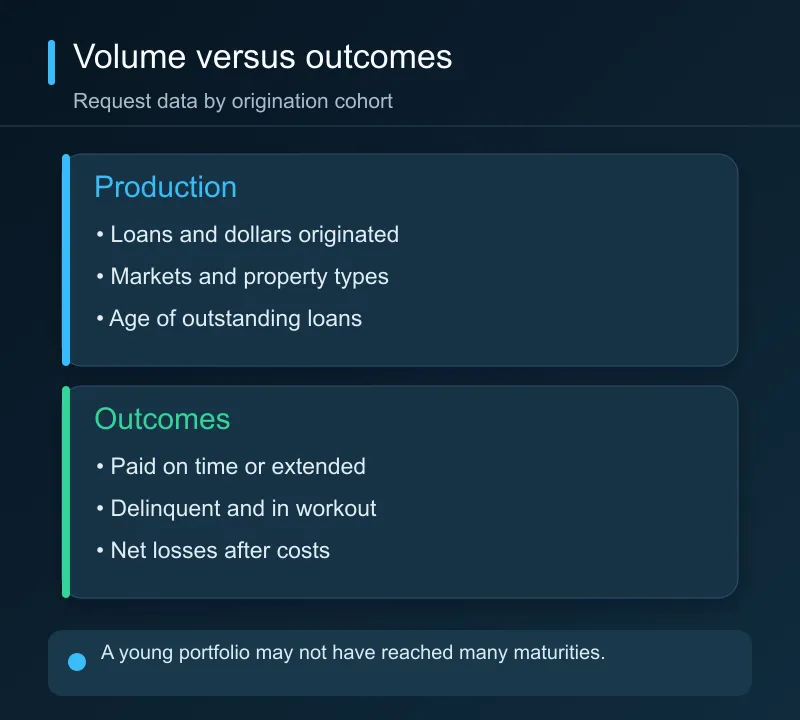
Production and realized performance answer different questions.
“Loans funded” and “dollars originated” describe production, not investor results. Request counts and dollars by origination period, with loans paid as scheduled, extended, delinquent, in foreclosure, sold at a loss, and still outstanding. Ask whether a loan that is repeatedly extended is counted as current and whether reported returns include fees, legal expenses, and principal losses. A young portfolio can look excellent simply because many loans have not reached maturity.
Review concentration by geography, borrower, property type, and funding source. Find out whether the company relies on one warehouse line or a small group of capital providers; losing that funding could affect future advances and servicing. The FDIC’s participation guidance stresses continuing information and clearly defined lead-lender responsibilities for banks. It is a useful way to frame questions about any operator controlling other people’s loan interests.
Follow the incentives
Map every way the operator earns money: origination charges, spread between borrower rate and investor yield, management or servicing fees, extension charges, and performance compensation. Ask which fees are retained by the company, which go to investors, and whether the manager has capital at risk alongside them. An operator paid mostly when loans close can face different incentives from one whose revenue depends on realized recoveries. The documents should explain conflicts and who can approve related-party transactions.
Verify the legal entity and principals. If an investment adviser or broker is involved, the SEC’s Ask and Check page points to registration and background tools where applicable. A database result is not a verdict on the investment; the activity and structure determine what registration is required. The final test is whether the documents give you timely information and meaningful rights when the operator’s judgment differs from yours.