
LTV, LTC, and ARV: the numbers behind a loan offer
A term sheet may say “85% LTC” and “70% ARV.” Neither figure tells a builder how much money arrives at closing. The lender may apply several ceilings to the same project, then hold part of the approved amount for construction. Treat the percentages as a way to calculate a maximum commitment, not as a promise that your purchase will be fully funded.
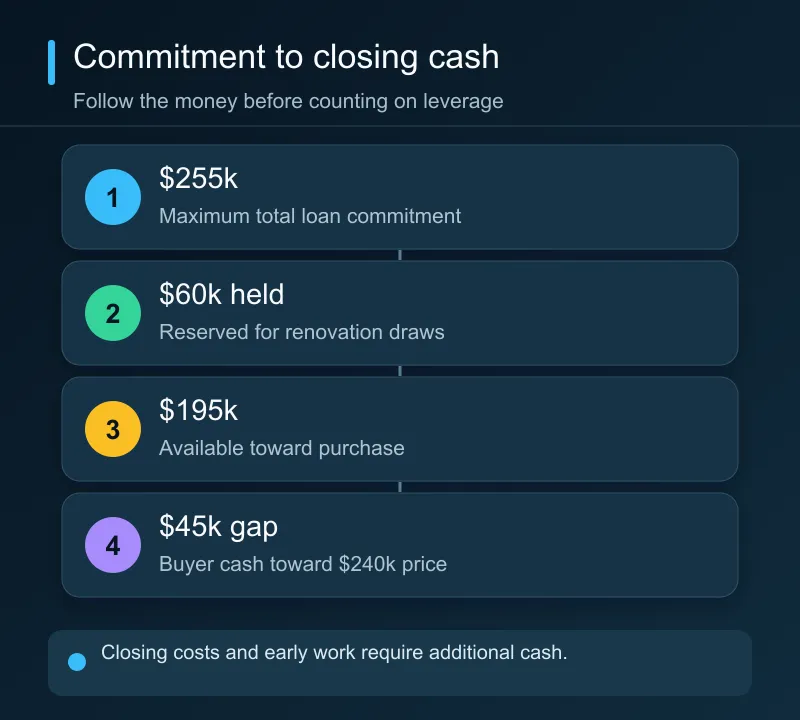
The approved commitment is larger than the amount available to buy the property.
The three measurements
Loan-to-value (LTV) compares a loan amount with a property value. For a purchase or refinance, ask whether the denominator is purchase price, current as-is value, or another accepted value. Loan-to-cost (LTC) compares a loan with eligible project costs, often purchase plus approved renovation, though lenders may exclude certain soft costs. After-repair value (ARV) is the estimated value when the specified work is complete. A lender may also cap the loan at a percentage of that projected value. RCN Capital’s published programs illustrate how separate cost and ARV caps can appear in one offer; its current percentages should not be assumed for another lender or deal.
A project with two caps
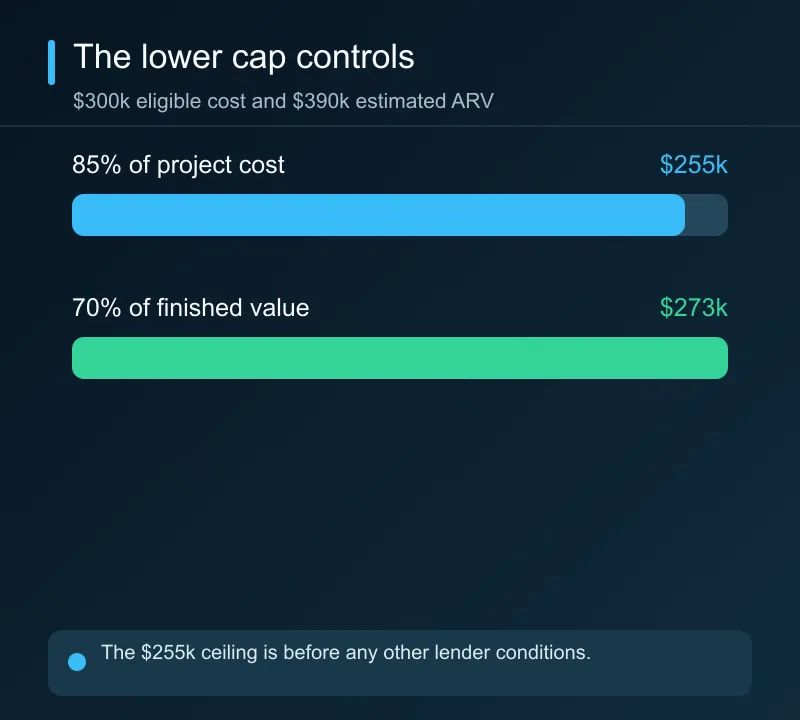
Two leverage limits can apply at once. In this example, the cost-based cap sets the maximum.
Suppose the purchase is $240,000, approved rehab is $60,000, and supported ARV is $390,000. Purchase plus rehab is $300,000. At 85% LTC, the ceiling is $255,000. At 70% ARV, the ceiling is $273,000. If both apply, the lower figure—$255,000—sets the maximum before any as-is-value cap, reserve requirement, or other condition.
Now suppose the lender reserves the $60,000 rehab allocation until work is done. The purchase advance would be $195,000. The builder must bring at least $45,000 to cover the purchase price, plus closing costs and perhaps cash for early construction work. If the lender requires a down payment or draws on different terms, those figures change. Request a sources-and-uses sheet that shows exactly what reaches the closing table and what remains held back.
What can change the result?
The lender might value the property below your ARV estimate. It might approve only $45,000 of a $60,000 planned renovation, exclude design or permit costs from LTC, or withhold a contingency. The appraisal or internal valuation can also change after an initial quote. Clarify who pays for any valuation, how the scope is defined, and whether the loan amount can be revised before closing.
ARV is especially sensitive to the finish level and comparable sales used. A completed-property estimate is not the same as today’s collateral value or a guaranteed resale price. The FDIC’s real estate lending guidance flags unsupported collateral values and speculative repayment as risks in bank lending. Builders should test the deal at a lower sale price even when the lender accepts their projected ARV.
When two lenders quote the same “leverage,” compare the actual closing advance, approved construction budget, interest basis, cash needed before each draw, and maximum payoff. Those are the numbers that determine whether the project can move from acquisition to completion without a funding gap.