
What to read in a hard money loan package
The term sheet gets everyone talking about the same loan. The signed package is what the parties must live with. A builder who understands the quoted rate but has not read the draw agreement or guarantee may discover the important terms after closing, when changing them is difficult.
Ask for the final documents early enough to review them with a real estate attorney who knows the property’s state. Names and forms vary, but the following map gives you a way to read the package.
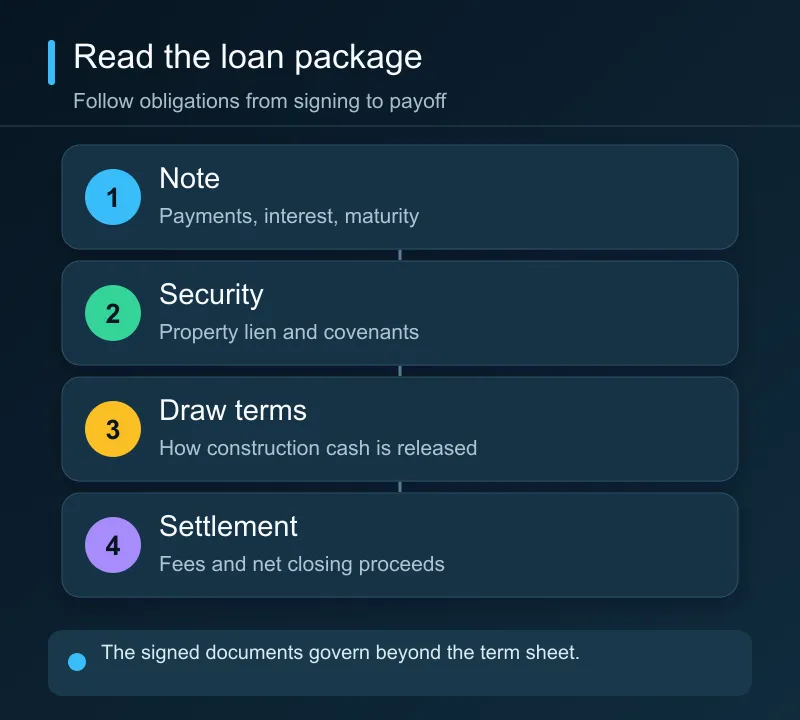
Each document answers a different question about the same transaction.
The note: what must be paid and when
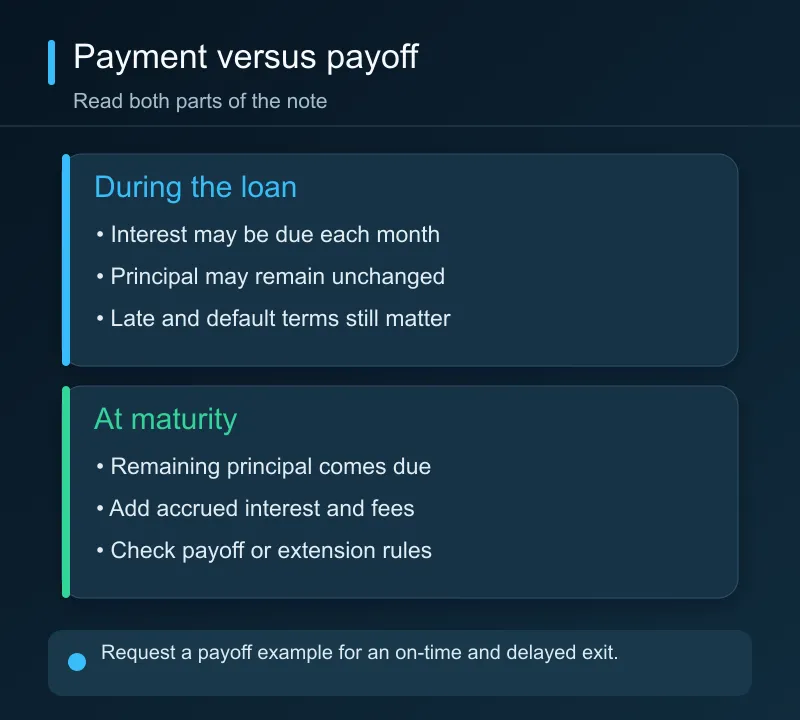
An interest-only schedule can keep interim payments small while principal remains due.
The promissory note usually states principal, interest calculation, payment schedule, maturity, late charges, default interest, and prepayment terms. Check whether interest accrues on the entire commitment or only money advanced. If payments are interest-only, calculate how much principal will still be due at maturity. Request payoff examples for an expected exit and a delayed one. A low interim payment does not make a large final payoff smaller.
The security instrument: what backs the debt
A mortgage or deed of trust generally puts a lien on the property. Verify the borrower name and legal property description. Look for covenants about taxes, insurance, repairs, waste, leases, transfers, and additional debt. If the lender also requires other property as collateral or a personal guarantee, identify who signs and how broad the obligation is. “Asset-based” in marketing does not mean “no personal recourse.”
Title work matters because an older lien, tax claim, or description problem can delay closing or weaken the security. Ask the settlement professional which exceptions remain on the title commitment. A lender’s title insurance protects the lender’s interest; it does not replace the owner’s protection, as the CFPB explains.
The draw agreement: how work gets funded
For renovation or construction, read the approved scope and budget beside the draw agreement. What work qualifies, when can a request be made, what proof is required, who inspects, and when may the lender withhold money? Who pays for an overrun or a change the lender did not approve? If the lender reimburses completed work, make sure your contractor payment schedule and cash reserves fit that rule.
The closing statement: where the cash goes
Reconcile the loan amount with the settlement statement. Origination and broker charges, third-party costs, prior liens, reserve accounts, and construction holdbacks all affect net proceeds. Confirm the amount reaching the seller and the cash you must bring. The entity named as borrower should match the intended owner and authorized signers.
Business-purpose investment loans may not use the standardized consumer mortgage forms familiar from home purchases; CFPB Regulation Z guidance explains the business-purpose distinction. Do not assume a missing consumer form makes a private loan invalid, and do not sign a package whose economics you cannot reconcile. Ask for corrections or a written explanation of material changes before funds move.