
From loan inquiry to funded deal
A builder may receive a financing estimate after entering an address and rehab budget. That is useful for deciding whether to keep talking, but it is not the same as funds ready for the title company. The lender still needs to verify the property, borrower, collateral, and closing conditions. A tidy deal file helps both sides discover problems while there is time to solve them.
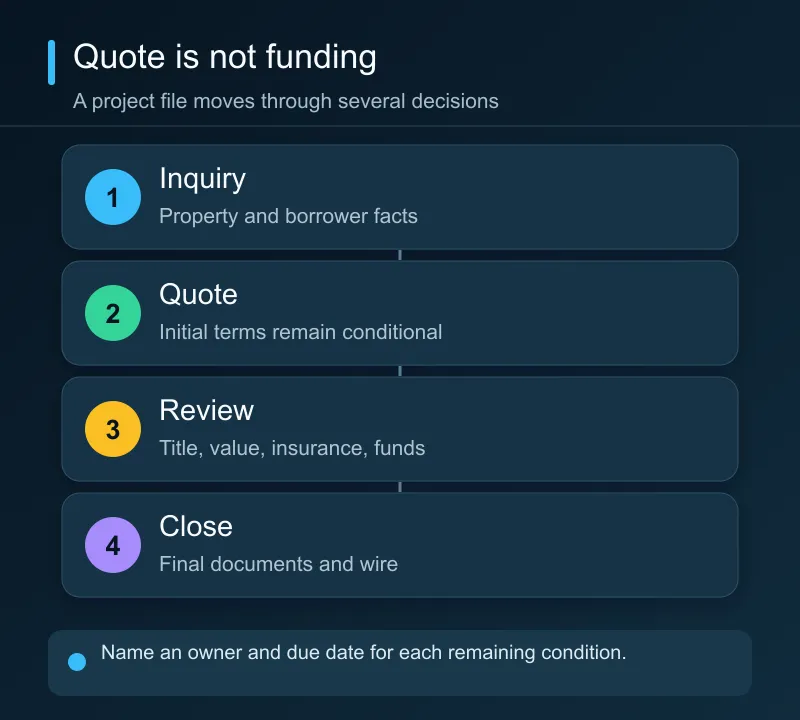
A quick estimate can change after valuation, title, insurance, and borrower review.
Give the lender a project it can evaluate
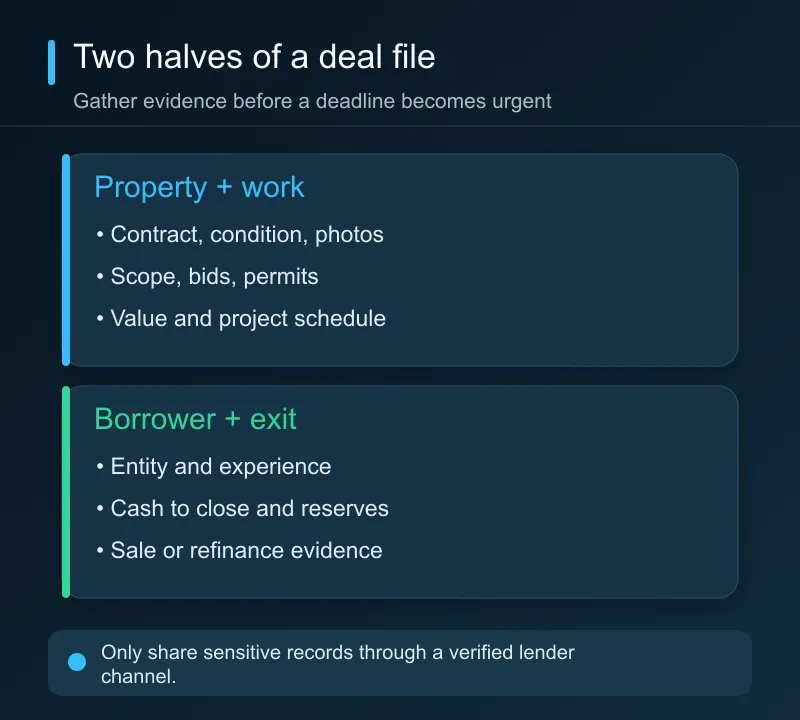
Organize the deal so the lender can find the project, money, and exit assumptions.
Start with the purchase agreement and deadline, property address and type, photos or condition report, purchase price, proposed work, line-item contractor budget, schedule, and evidence for the expected finished value. Explain whether you plan to sell, rent and refinance, or build and sell. If the exit is a refinance, describe the prospective takeout loan rather than writing only “refi.”
Have borrower or entity ownership information ready, along with relevant project experience and proof of funds for the down payment, closing costs, early work, and reserves. Do not upload sensitive personal or bank documents to an unfamiliar form before verifying the company and why it needs them. Anchor’s published intake outline asks for address, price, rehab budget, and ARV as initial deal facts; later conditions depend on the lender and project.
Separate the stages
An indicative quote is a starting range. A conditional approval means the lender still needs listed items or satisfactory results from title, valuation, insurance, or other review. A funding commitment should specify the final terms and conditions, though the actual loan documents govern at closing. Ask the lender to name the current stage and provide a written list of what remains open.
Put one owner and due date next to each condition: borrower, lender, appraiser, title company, insurer, contractor, or closing attorney. Common snags include an unresolved lien, property description mismatch, insurance that does not cover vacant construction, an appraisal below the quoted value, permit uncertainty, or cash that cannot be documented in time. A missed condition is more useful to find two weeks before closing than two hours before it.
Protect the closing
Compare the final loan amount, rate, points, holdback, guarantees, draw rules, and maturity with the last written quote. Reconcile the settlement statement: how much reaches the seller, how much is held, which fees are paid, and what cash you must wire. Ask for a written explanation of a material change before signing.
Wire instructions deserve their own check. Call the title or closing company on a number obtained independently—not the number in an unexpected email—to confirm the recipient and account. The CFPB’s mortgage-closing scam guidance explains why emailed changes are dangerous. The same safeguard is sensible on a business-purpose closing.
A closing schedule should include time to read the documents, fix errors, and fund the transaction. It is not complete when it merely shows the day everyone hopes to sign.