
Ground-up construction loans from private lenders
A new-build loan starts with a property that does not yet exist in its finished form. The lender is financing land, plans, a builder’s execution, and a future sale or refinance. That is a different risk from repainting and repairing an existing house. A private lender that offers fix-and-flip loans may have a separate construction program—or may not finance your project at all. RCN Capital’s program descriptions illustrate how construction criteria can vary with borrower experience.
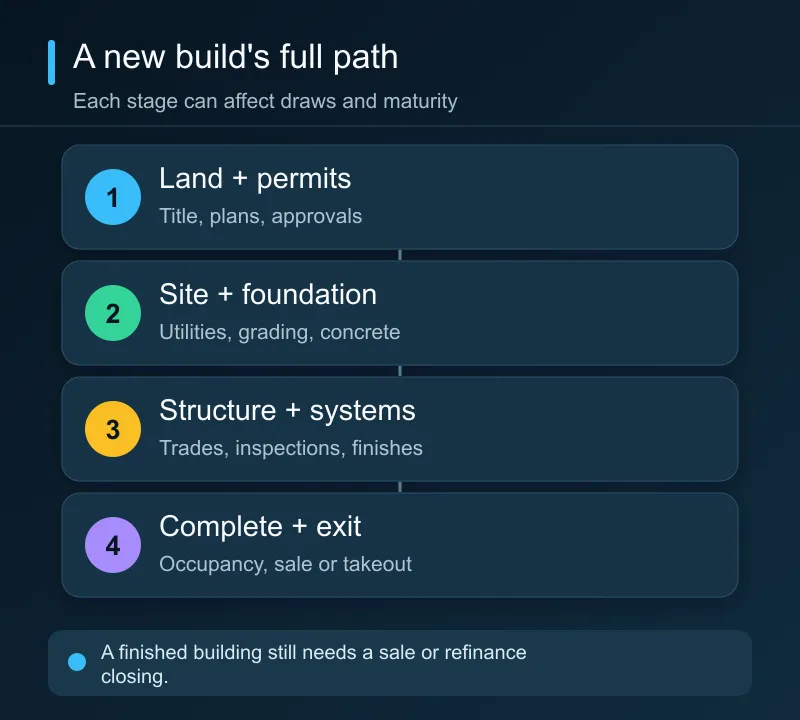
The loan must last through completion and the separate cash exit.
Get the site and scope ready
Before asking for a loan amount, gather the land contract or ownership record, survey, title information, site plan, drawings, permit status, utility and access details, builder contract, and a line-item budget. Separate land acquisition, site work, vertical construction, soft costs, interest, and contingency. Ask which items the lender will finance and which must be paid with borrower equity.
A permit “in process” is not the same as a permit issued. Identify decisions that could change the design or cost: zoning, drainage, utility connections, impact fees, inspections, and subdivision approvals where relevant. A builder with a signed trade bid has more useful cost evidence than one who quotes a single price per square foot. The lender may also review completed-project experience and available liquidity.
Understand how the money moves
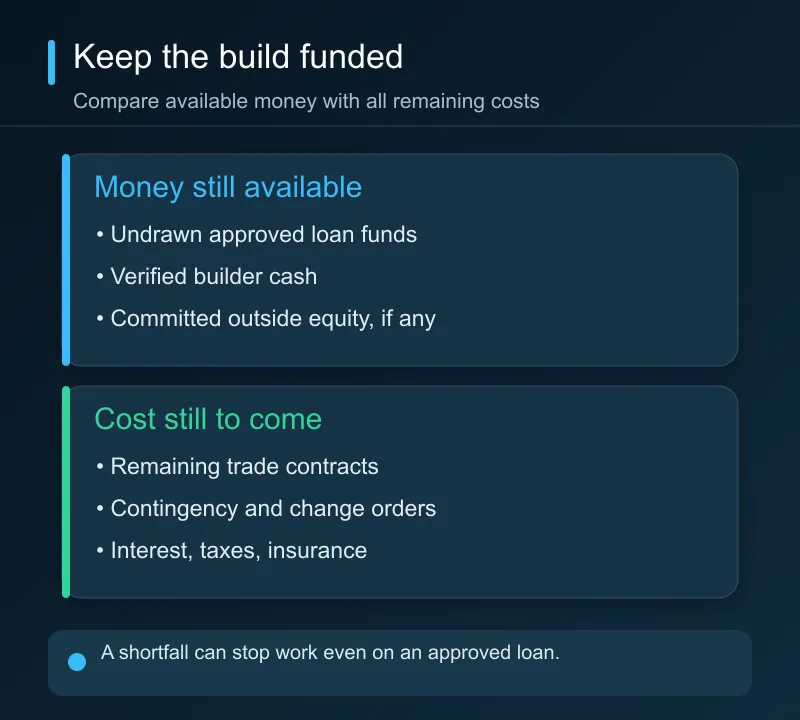
Recalculate funding sufficiency after every material change order.
The lender may pay off land debt at closing and hold most construction proceeds for draws. Find out when the borrower must contribute cash, what milestones trigger releases, who inspects, whether materials stored off-site qualify, and how lien waivers are handled. The OCC’s commercial real estate handbook describes progress-based draws and the importance of enough funds to complete construction in bank lending. A private lender’s signed documents control its own process.
After a change order, calculate cost to complete again. Add remaining approved loan proceeds to cash the borrower can actually contribute, then compare with remaining work, contingency, carrying costs, and fees. If the number is short, the project can stop even though the original loan was fully approved.
Leave time to exit
Finishing the building is not the same as paying off the loan. The schedule may still require final inspection, certificate of occupancy where applicable, listing or leasing, a buyer’s financing, or a takeout appraisal and closing. Weather, subcontractor shortages, and plan changes can move every stage. Test the loan’s maturity date against a delayed calendar, not only the builder’s best-case completion date.
For a spec home, support the finished sale price with comparable closed sales and allow for selling costs. For a rental build, find out what a permanent lender will require once the building is complete. The construction loan should be sized around a project that can finish and repay, not simply around the maximum percentage a lender advertises.