
From bridge loan to rental financing
Keeping a renovated property as a rental can be a sound business plan, but it creates two separate financing decisions. The bridge lender funds the purchase and work today. A future rental lender must approve a new loan after the property is ready. The first lender’s approval says nothing certain about the second lender’s appraisal, rent calculation, or loan amount.
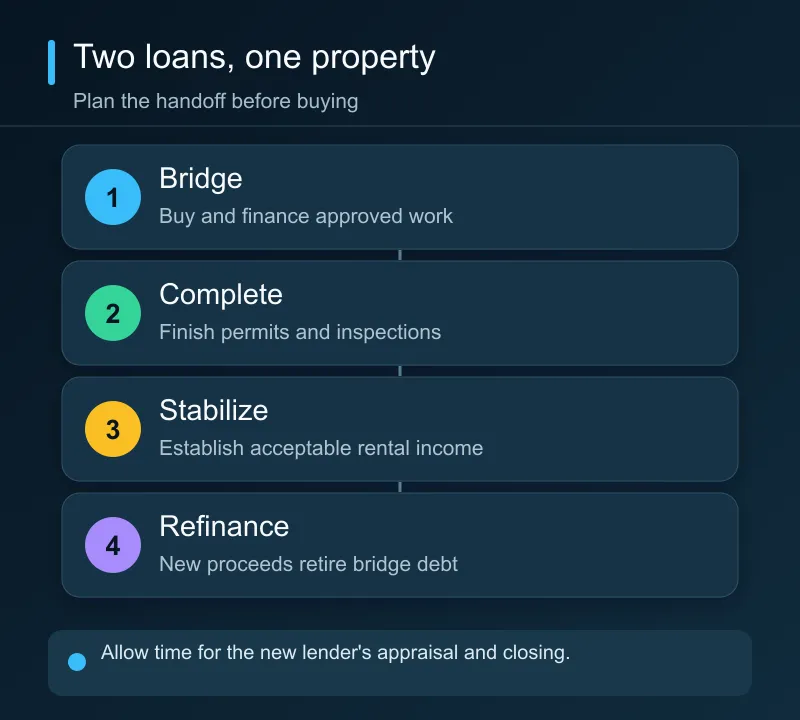
The rental refinance is a second approval, not a guaranteed feature of the bridge loan.
Plan the second closing before the first
Talk with possible takeout lenders while you are still evaluating the acquisition. Ask about property condition, required permits and final inspections, lease or occupancy rules, seasoning, appraisal, credit and reserve requirements, ownership entity, and any limit on cash-out refinance. Find out when an application can begin and how long a complete file may take. Program requirements can change between purchase and refinance, so keep a backup plan.
Some rental programs use the property’s debt-service coverage ratio (DSCR). That compares rental income with required debt and property expenses under the lender’s formula. Visio Lending describes one approach, but lenders can treat rent, vacancies, taxes, insurance, and association dues differently. Do not assume a rent estimate alone establishes that the property qualifies.
Calculate the takeout gap
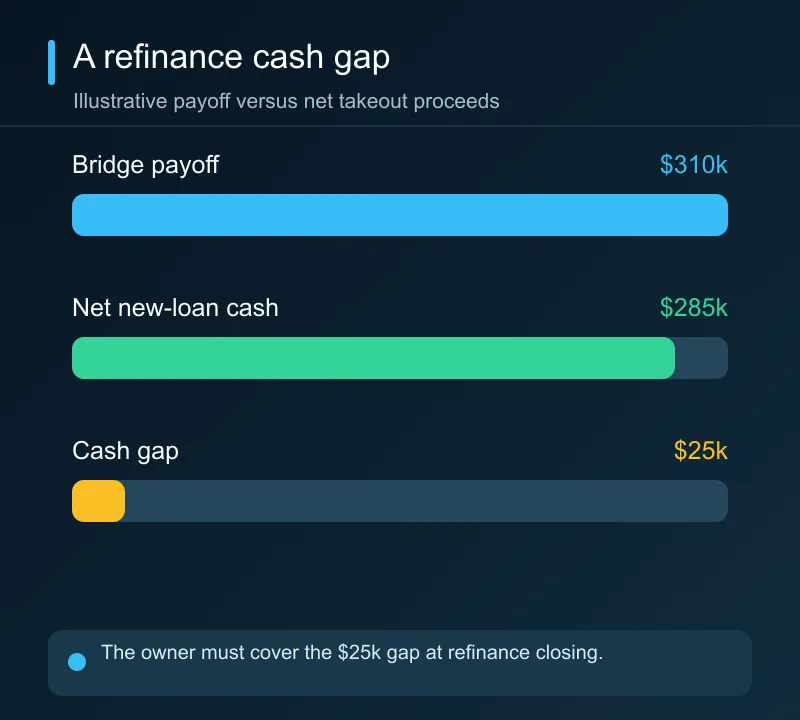
Net new-loan proceeds, not property value, must cover the bridge payoff.
Estimate the bridge payoff on the likely refinance date: principal, accrued interest, and fees. Then estimate the net proceeds from the rental loan after its own fees and closing costs. Suppose the bridge payoff is $310,000 and the new loan produces $285,000 net. The owner must bring $25,000 to the closing or find another way to retire the bridge debt. A $400,000 projected property value does not answer that cash question.
Test a lower appraisal and lower rent. A valuation can fall even if the rehab was completed exactly as planned; local sales may have changed or the lender may use different comparables. Higher taxes or insurance can weaken property cash flow. A longer lease-up may extend the bridge loan while interest and carrying costs continue.
Keep the rental viable after refinance
Do not solve the bridge payoff by taking a new loan that leaves the rental unable to cover ordinary expenses, repairs, vacancies, and debt payments. Budget maintenance and capital replacement, not just principal, interest, taxes, and insurance. Check any prepayment charge on the new loan if you might sell or refinance again soon. The refinance is a new obligation, not the end of the investment decision.
Build a calendar that includes construction, inspections, leasing, rental-loan underwriting, and closing before bridge maturity. If the second loan is smaller or later than planned, options may include additional equity, an extension the bridge lender actually approves, or a sale. Price those alternatives before buying. The strongest bridge-to-rental deals work even when not every dollar of initial cash comes back at refinance.