
When a hard money project runs late
A delay becomes expensive before a payment is missed. Permits take longer, a subcontractor leaves, or a buyer’s financing falls through. The loan balance remains and carrying costs continue. The earlier a builder updates the schedule and cash forecast, the more options may be available.
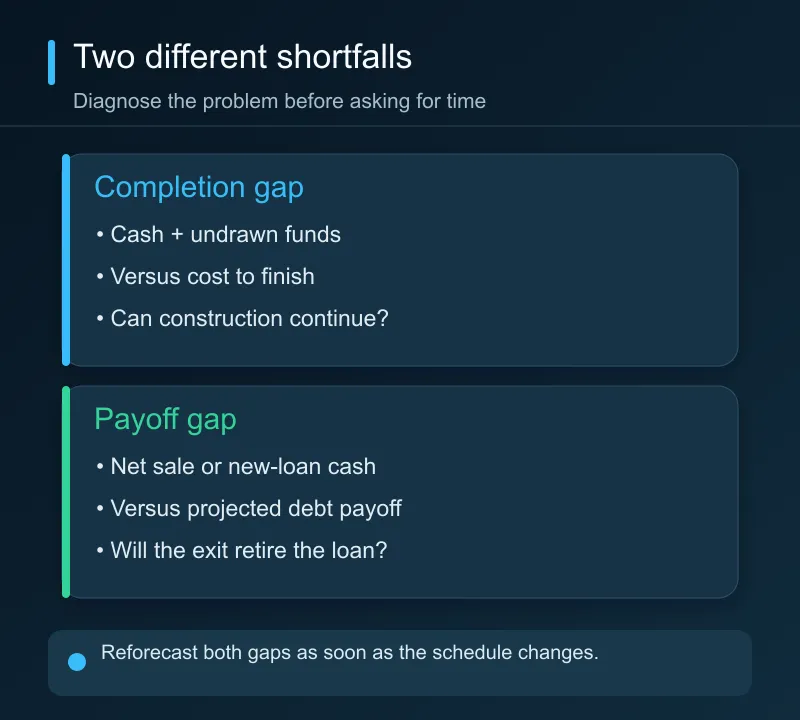
An extension buys time; it does not automatically fix either gap.
Take a fresh inventory
Write down work completed, work remaining, the approved construction balance still undrawn, cash available, and the latest credible completion date. Get updated contractor costs rather than extending the old budget by guesswork. Then obtain a current payoff statement and estimate the balance on the revised sale or refinance date. Include property taxes, insurance, utilities, security, and any extension charge during the extra months.
A project can have two different gaps. A completion gap exists when undrawn loan funds plus available borrower cash will not cover the work left to finish. A payoff gap exists when expected net sale or refinance proceeds will not cover the debt. A loan extension may buy time, but it does not supply missing equity or fix a sale price below the payoff.
Read the extension provision now
Check the request deadline, notice method, fee, new rate, possible paydown, updated valuation or insurance conditions, and who has authority to approve. A term sheet’s mention of an extension may not be a contractual right. Put any lender agreement in a signed modification, not a verbal assurance.
Prepare a concise update for the lender: revised schedule, remaining budget and funding sources, current photos, permits, new sale or rent evidence, and an exit calculation. The FDIC’s guidance on commercial real estate workouts recognizes that a well-supported modification can sometimes be preferable to immediate enforcement in bank lending. That is not a promise that a private lender must extend a loan; it is a reason to bring evidence rather than optimism.
Compare the available paths
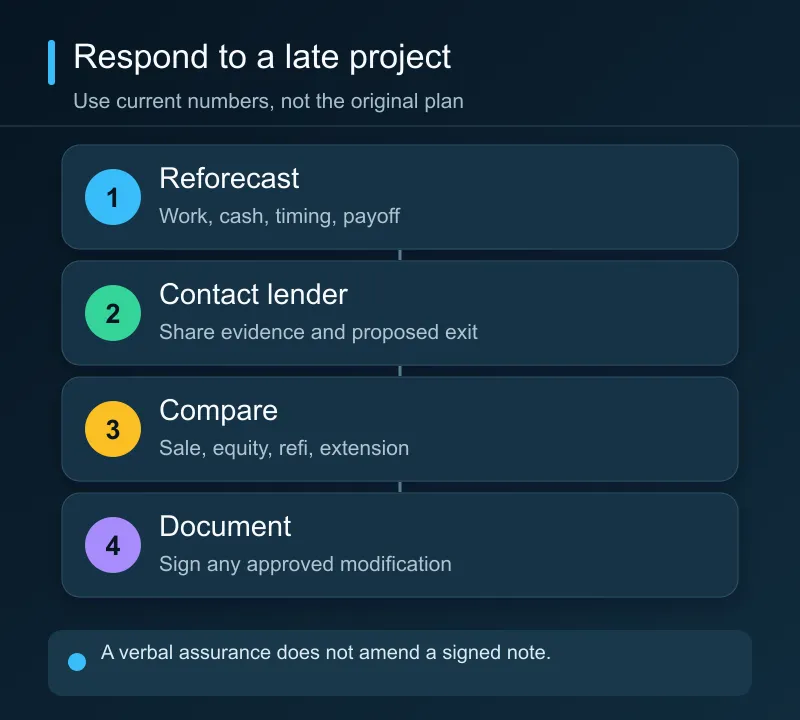
Bring revised evidence to the lender before the maturity deadline.
A sale at a lower price, new equity, a refinance, a documented extension, or a negotiated resolution may each change the expected net result. Price legal and transaction costs as well as additional interest. If the borrower cannot repay at maturity or misses required payments, the note may impose late charges, default interest, or remedies against collateral and guarantors. The exact process depends on the documents and state law; get local legal advice promptly if a default notice arrives.
Do not wait for the last week of the term to discover whether the loan can be repaid. A current cost-to-complete and payoff forecast gives everyone a chance to address the real problem while choices still exist.