
Bridge loans and the exit strategy
The word bridge suggests a short crossing. In a property deal, the far side must be real: a sale with enough net proceeds, a refinance large enough to pay off the old loan, or another documented source of cash. A vague intention to “refinance later” is not an exit plan.
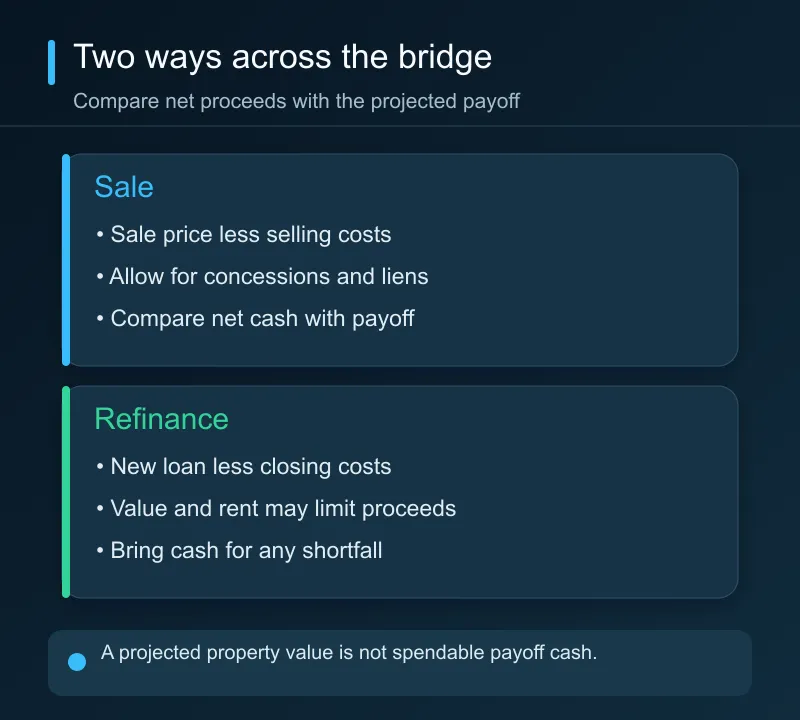
Both exits must produce enough net cash to retire the same bridge debt.
Start with the payoff, not the projected value
Get a payoff estimate for the month you expect to exit. It should include principal, accrued interest, and any fees. If the loan has an interest-only payment, the principal will generally still be outstanding. For a sale, subtract broker commissions, concessions, transfer costs, and other seller obligations from a conservative sale price. Compare net proceeds with the payoff—not the headline sale price.
For a refinance, estimate the new loan from the takeout lender’s actual program. The new lender may use a lower appraisal, require completed work or a lease, limit cash-out, or deduct its own fees. If a bridge payoff could be $310,000 and the new loan would produce only $285,000 net, the borrower needs $25,000 cash at the refinance closing. A bigger projected ARV does not erase that gap.
Build the calendar backward
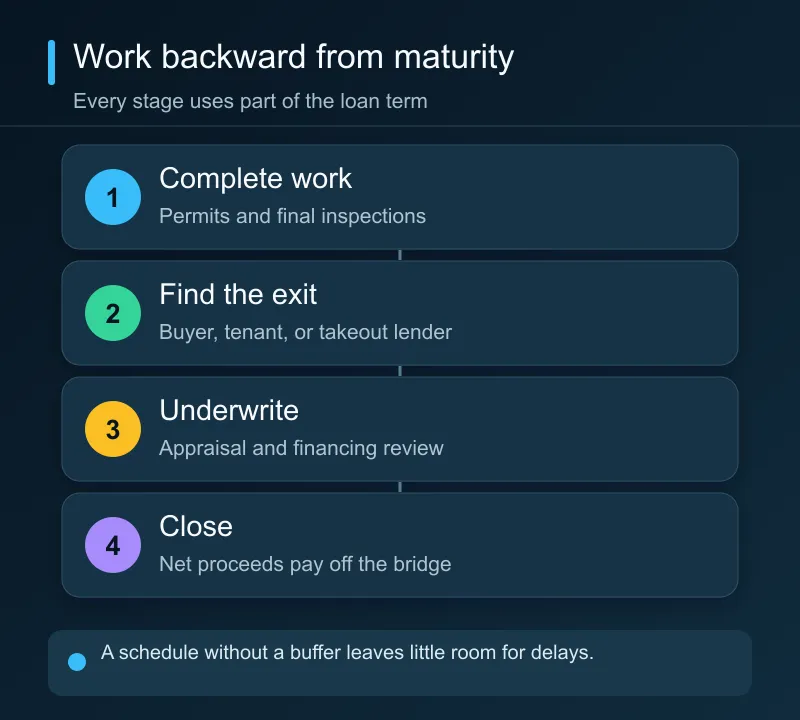
Work backward from the debt deadline, not forward from the builder’s best-case completion date.
Mark the maturity date, then the latest date the sale or refinance must close. Work backward through buyer financing or takeout underwriting, appraisal, listing or lease-up, final inspections, construction, and permits. A builder who expects eight months of work on a twelve-month note may have much less than four months of spare time once marketing and closing are included.
Write a second calendar in which one stage slips. For a sale, consider a buyer backing out or a slower market. For a refinance, test lower rent, a different value, or a credit requirement that is harder to meet. Put extra interest, taxes, insurance, and extension costs into that case. The FDIC’s commercial real estate guidance, aimed at banks, flags renewals or refinances without credible support for full repayment.
Know what an extension actually requires
A term sheet may mention an extension, but the signed note controls. Check the notice deadline, fee, new rate, possible paydown, valuation or insurance requirements, and whether approval is discretionary. Ask who has authority to approve it. If the borrower must request an extension before maturity, waiting until the final week is risky.
The fallback need not be elegant, but it should be specific. Could the property sell at a lower price and still retire the debt? Is there enough cash to bridge a refinance shortfall? Would a longer initial term reduce the chance of an expensive extension? A bridge loan is useful when it carries the project to an exit with room for ordinary setbacks.